
What To Do When Your Baby Won’t Eat (Baby-Led Weaning Tips)

on Sep 27, 2021, Updated Apr 21, 2026
This post may contain affiliate links. Please read our disclosure policy.
Add as Google preferred sourceHave you ever taken the time to prepare the perfect meal for your baby, only for them to show absolutely no interest, cry, throw it on the floor, or refuse it altogether? You get so excited for them to eat it, and they want nothing to do with it. If you’ve ever been there, I’m right there with you.
And here’s the good news: this is completely normal, especially when starting solids. There are so many factors that can affect how a baby eats at any given meal, so let’s talk about what to do when your baby barely eats.
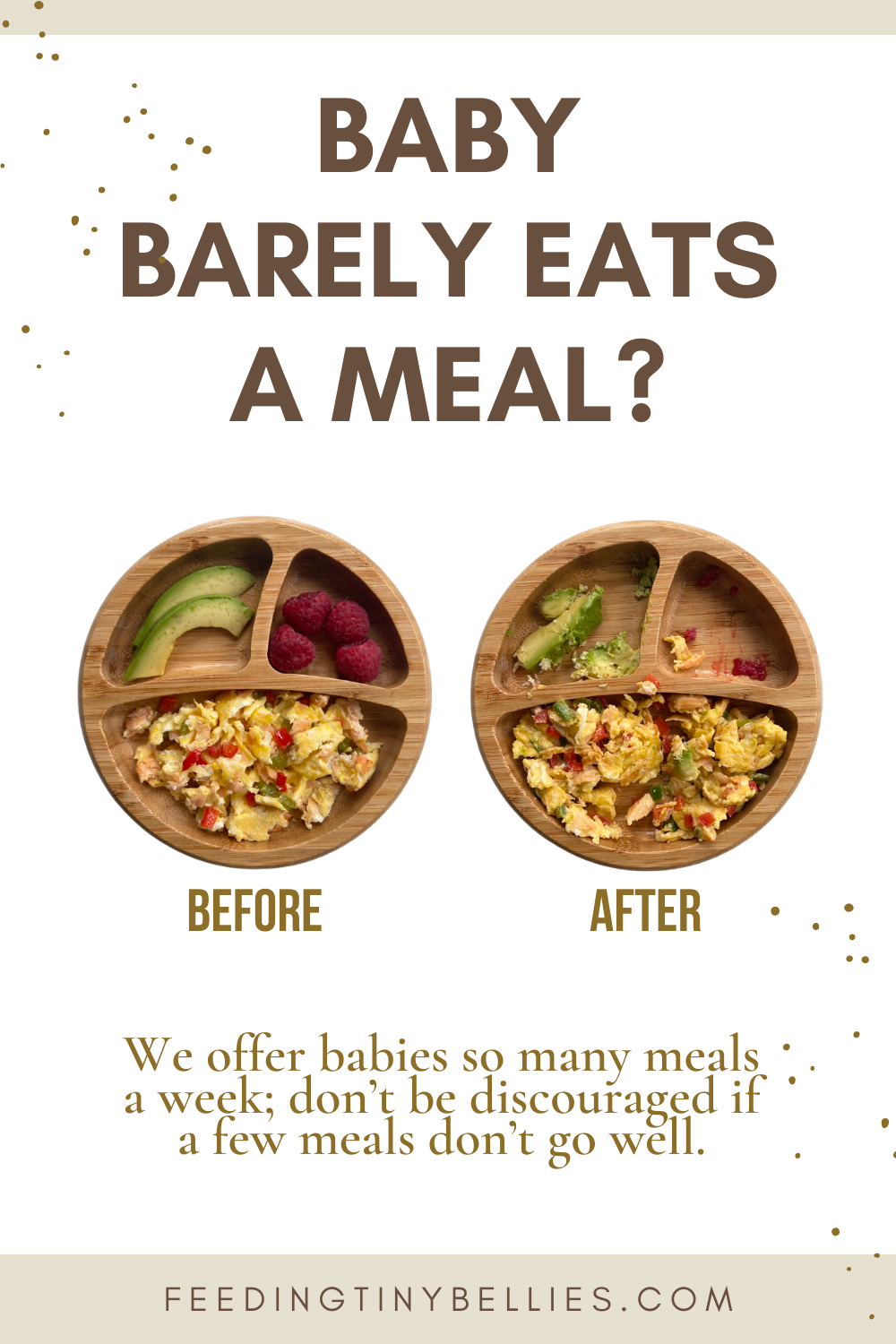
Table of Contents
What To Do When Baby Barely Eats A Meal
It’s so easy to feel discouraged when our babies don’t eat well. We immediately jump to blaming ourselves and wondering if we’re doing something wrong. It can also be tempting to try to get them to eat “just a little more”… but what actually counts as “enough”?
Oftentimes, our version of enough is much more than what their little bodies actually need. So what should you do instead?
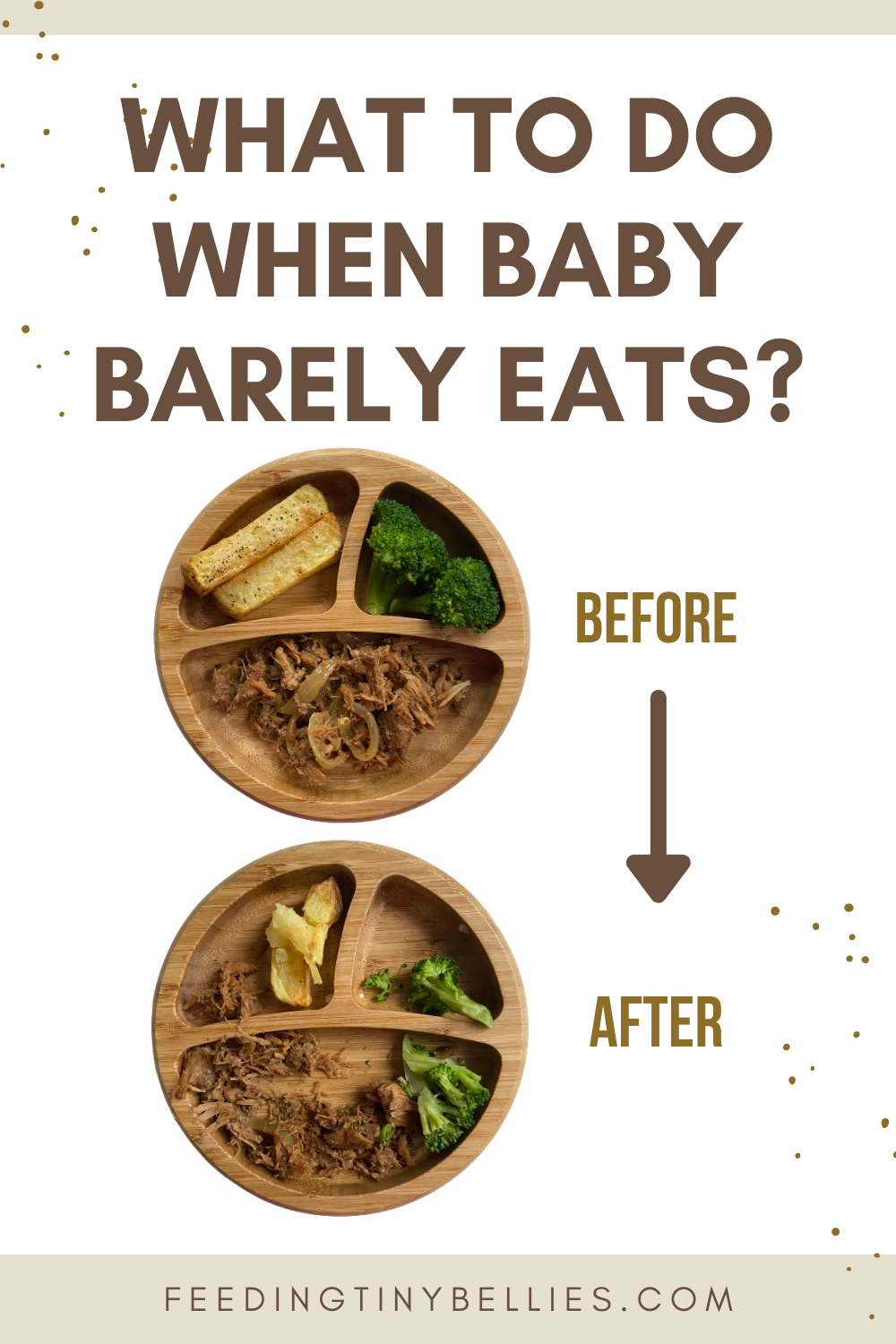
Let them be. Babies are incredibly in tune with their hunger cues. With baby-led weaning, it can feel like they didn’t eat anything—but in reality, they often eat more than we think.
Don’t force-feed. Force-feeding can create negative associations with food over time. One of the biggest benefits of baby-led weaning is allowing babies to stay in control of their intake.
Try not to get discouraged. Even interacting with food, touching it, tasting it, licking it, is still a win and part of the learning process.
Move on and try again at the next meal. Remember the division of responsibility: Your job is to offer the food. Your baby’s job is to decide if and how much they eat.
Keep milk feeds consistent. Breastmilk or formula should remain your baby’s primary source of nutrition until age 1, so a light meal here and there is okay.
Factors That Can Affect How A Baby Eats
If your baby is not eating much, there’s usually a reason, and most of them are completely normal.
Lack of appetite: Sometimes babies simply aren’t hungry. They may have had more milk or eaten more at a previous meal.
Tiredness: An overtired baby is much less likely to eat well.
Discomfort: Make sure your baby is seated comfortably and securely in their highchair with proper support.
Overwhelmed: Too much food, noise, or stimulation can make it harder for babies to focus on eating. Keeping mealtimes calm and simple can help.
Illness: Just like adults, babies often eat less when they’re not feeling well.
Time of day: It’s common for babies to eat more earlier in the day and less at dinner.
Signs That A Baby Is Done Eating
Babies don’t need to “finish their plate” to be full. Instead, they show us in other ways:
- Turning their head away
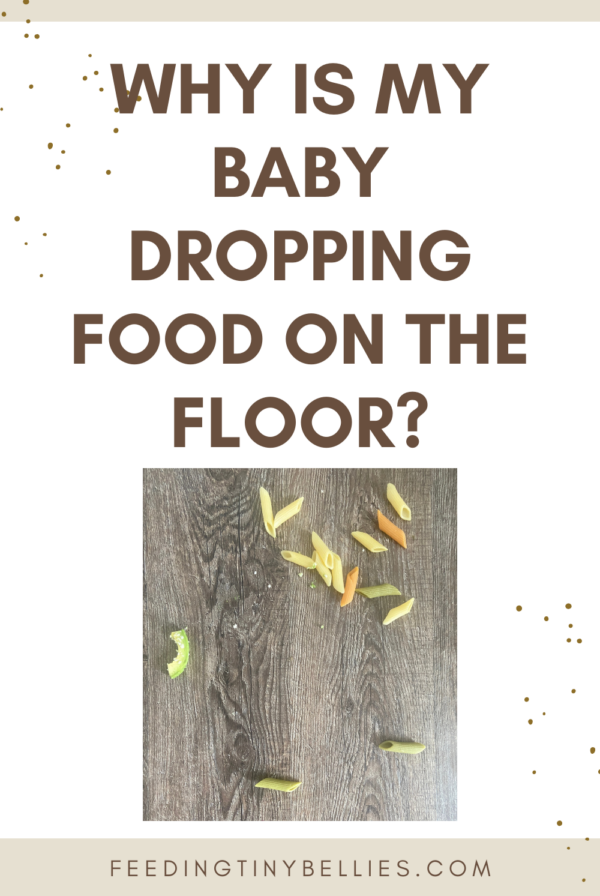
- Throwing food
- Fussing or whining
- Squirming in the highchair
- Playing with food instead of eating
- Rubbing food into their face or hair
- Losing interest or zoning out
These are all normal cues that your baby is done.
When Should You Worry About a Baby Not Eating?
Most of the time, a baby barely eating solids is nothing to worry about.
However, you may want to check in with your pediatrician if:
- Your baby consistently refuses all solids over time
- There are concerns with weight gain
- Your baby has difficulty chewing or swallowing
If it’s just an occasional meal (or even a few days), that’s typically completely normal.
Real Life Example
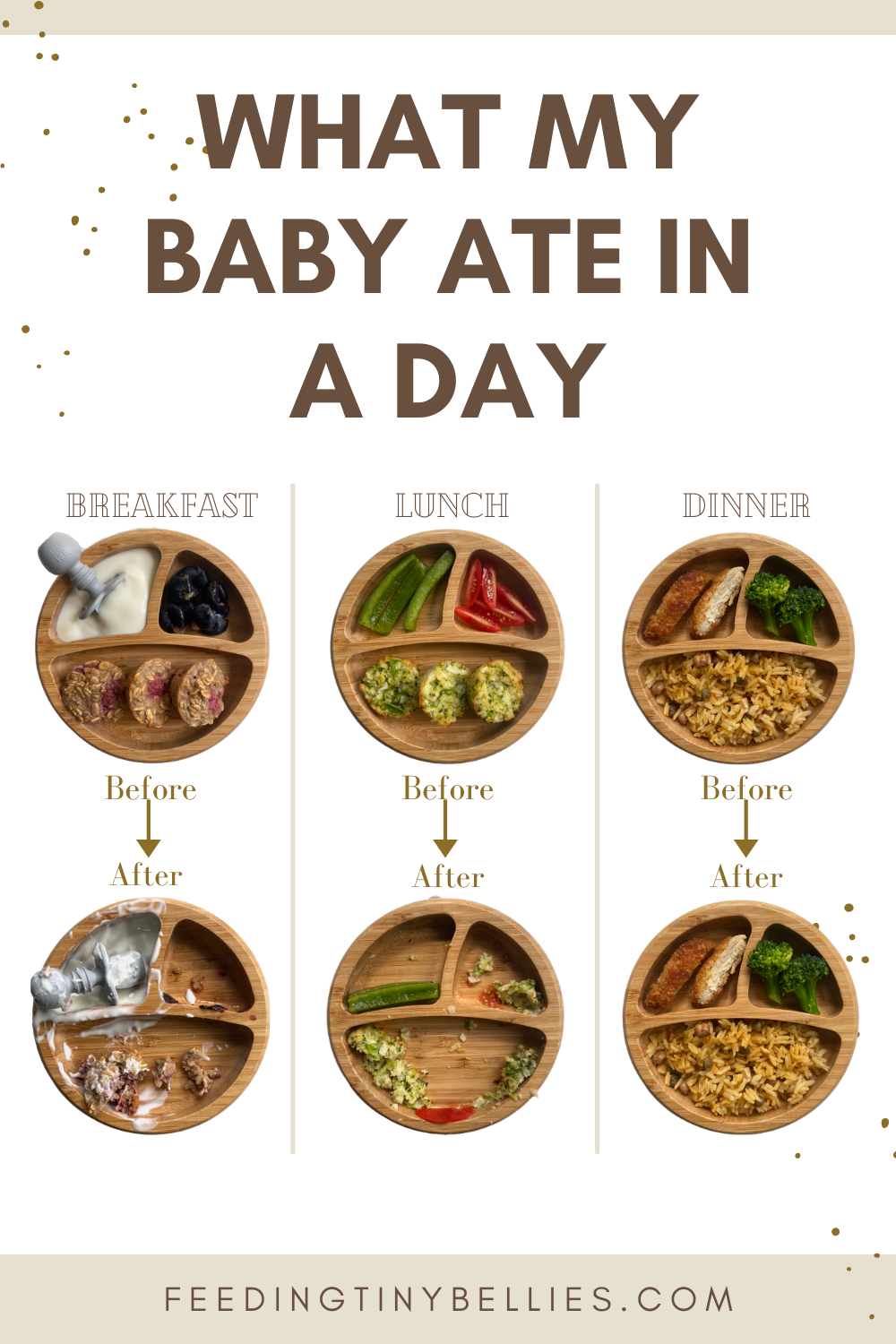
Here’s what my baby ate in a day…and yes, dinner looks basically untouched. That’s because he probably only ate a few bites. And honestly? I still considered it a win. He had a great breakfast, ate a little at lunch, drank enough milk, took good naps, and was happy. Babies are unpredictable. Some eat a lot, some eat very little, and most go back and forth. And that’s okay.
Frequently Asked Questions
Yes, this is very normal, especially in the early stages of starting solids. Some meals, your baby may eat a lot, and other meals, they may eat almost nothing. Appetite can vary day to day, and that’s okay.
Try not to stress or force it. Continue offering a variety of foods at regular mealtimes and let your baby decide if they want to eat. Consistency and low pressure go a long way.
That’s actually part of the learning process! Touching, squishing, and exploring food helps babies get comfortable with new textures and builds feeding skills, even if they’re not eating much yet.
Yes! Repeated exposure is key. It can take many tries before a baby accepts a new food, so don’t be discouraged if they don’t eat it the first (or fifth) time.
Every baby is different, and appetites can change from day to day. If your baby barely eats sometimes, it doesn’t mean you’re doing anything wrong. Keep offering a variety of foods, stay consistent, and trust your baby to lead the way. If you want easy meal ideas your baby can actually explore and enjoy, my baby-led weaning cookbook is a great place to start.