

Baby & Toddler Feeding Schedule (By Age + Sample Schedules)

on Oct 01, 2021, Updated Apr 21, 2026
This post may contain affiliate links. Please read our disclosure policy.
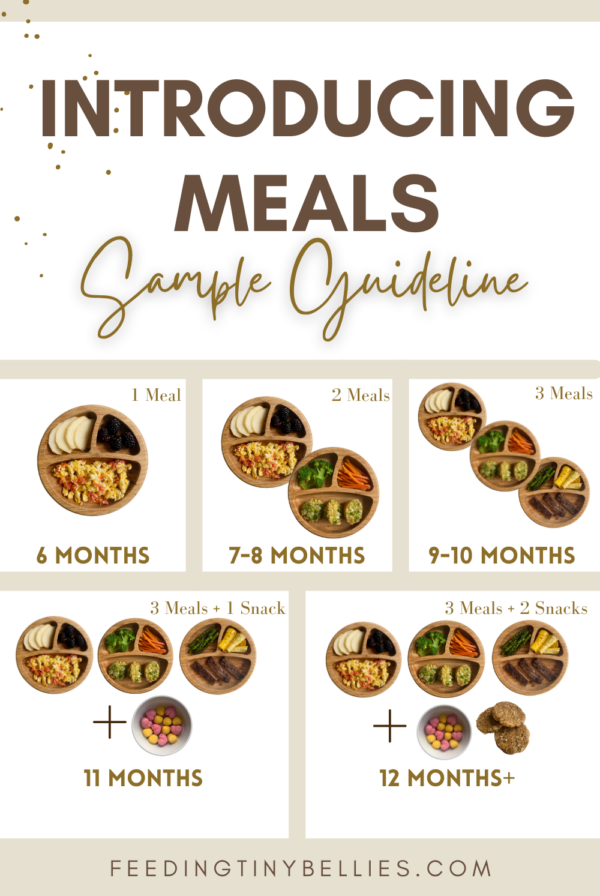
Add as Google preferred sourceLooking for a baby or toddler feeding schedule that actually works in real life? While there’s no one-size-fits-all routine, having a general structure for meals and snacks can help create a smoother, more predictable day.
Determining the perfect feeding schedule for your little one sounds like a dream. The “perfect” schedule might look like:
- Your baby sleeping at the same time every day
- Drinking the exact same ounces each feed
- Eating perfectly balanced meals on a set schedule
But the reality? That doesn’t exist. No two babies are the same, and no two days are the same either. Some days your baby eats great. Other days…not so much. Some days naps go perfectly. Other days everything is off. And that’s okay. Schedules can be helpful, but they should be used as guidelines, not rules. Let’s take a look at what this can look like in real life.
Table of Contents
Sample Schedules
These are sample schedules from when my boys were younger. Every baby and toddler is different, but I hope these examples give you a helpful starting point. Below are real-life examples of what our days looked like at different ages. These weren’t rigid schedules, just flexible routines that worked for us at the time.
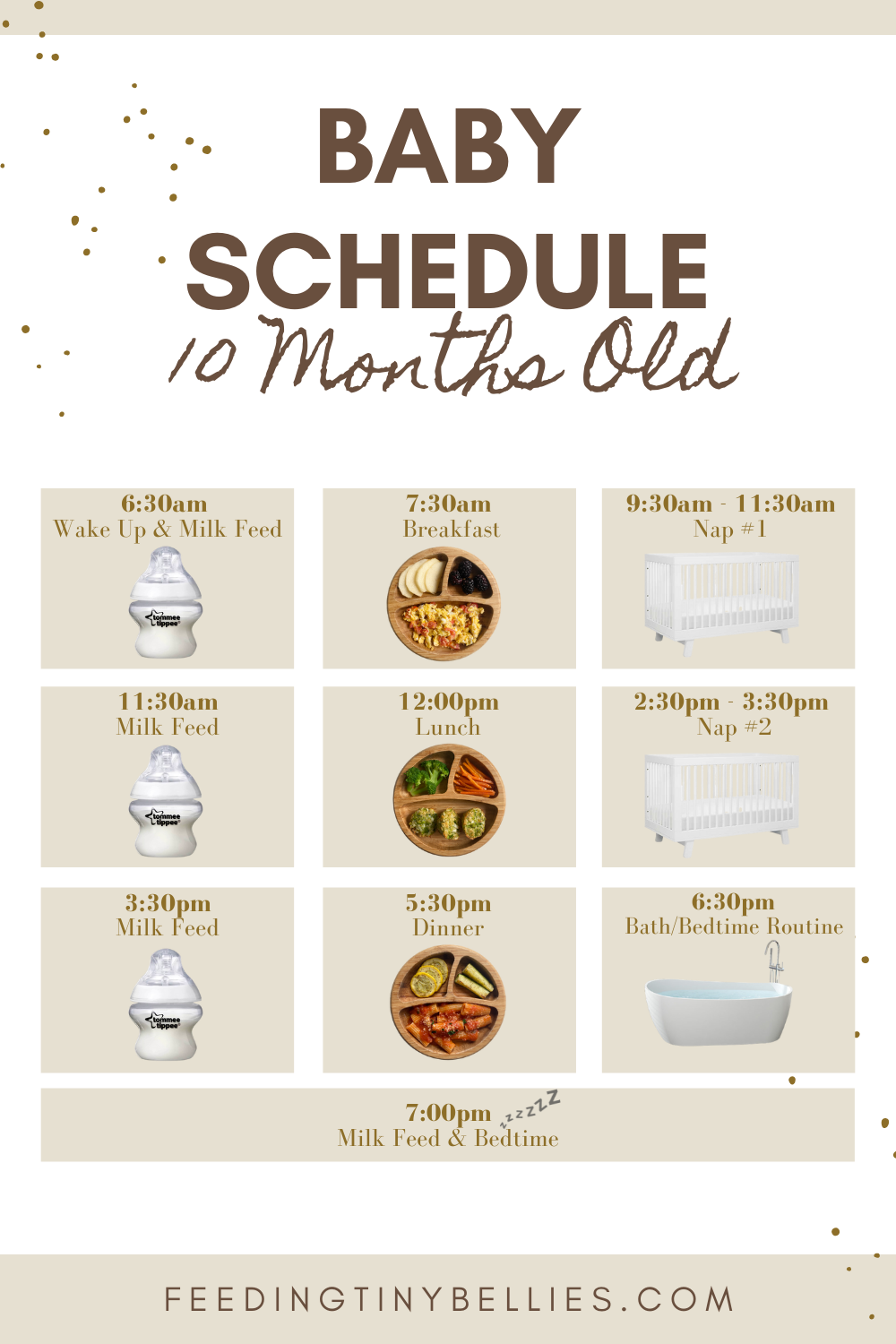
10 Month Old Sample Schedule
Here’s an example of what a typical day looked like around 10 months.
- 6:30am: Wake + Milk Feed
- 7:30am: Breakfast
- 9:30am: Nap (about 2 hours)
- 11:30am: Milk Feed
- 12:00pm: Lunch
I tried to keep about 30 minutes between milk and solids so there was time to build an appetite.
- 2:30pm: Nap (about 1 hour)
- After Nap: Milk Feed
- 5:30pm: Dinner
- 6:30pm: Bedtime Routine
- 7:00pm: Bedtime
Some days included a small snack before dinner if needed. And of course, there were plenty of days when naps were off, or meals didn’t go as planned.
Toddler Feeding Schedule (Around 2–3 Years Old)
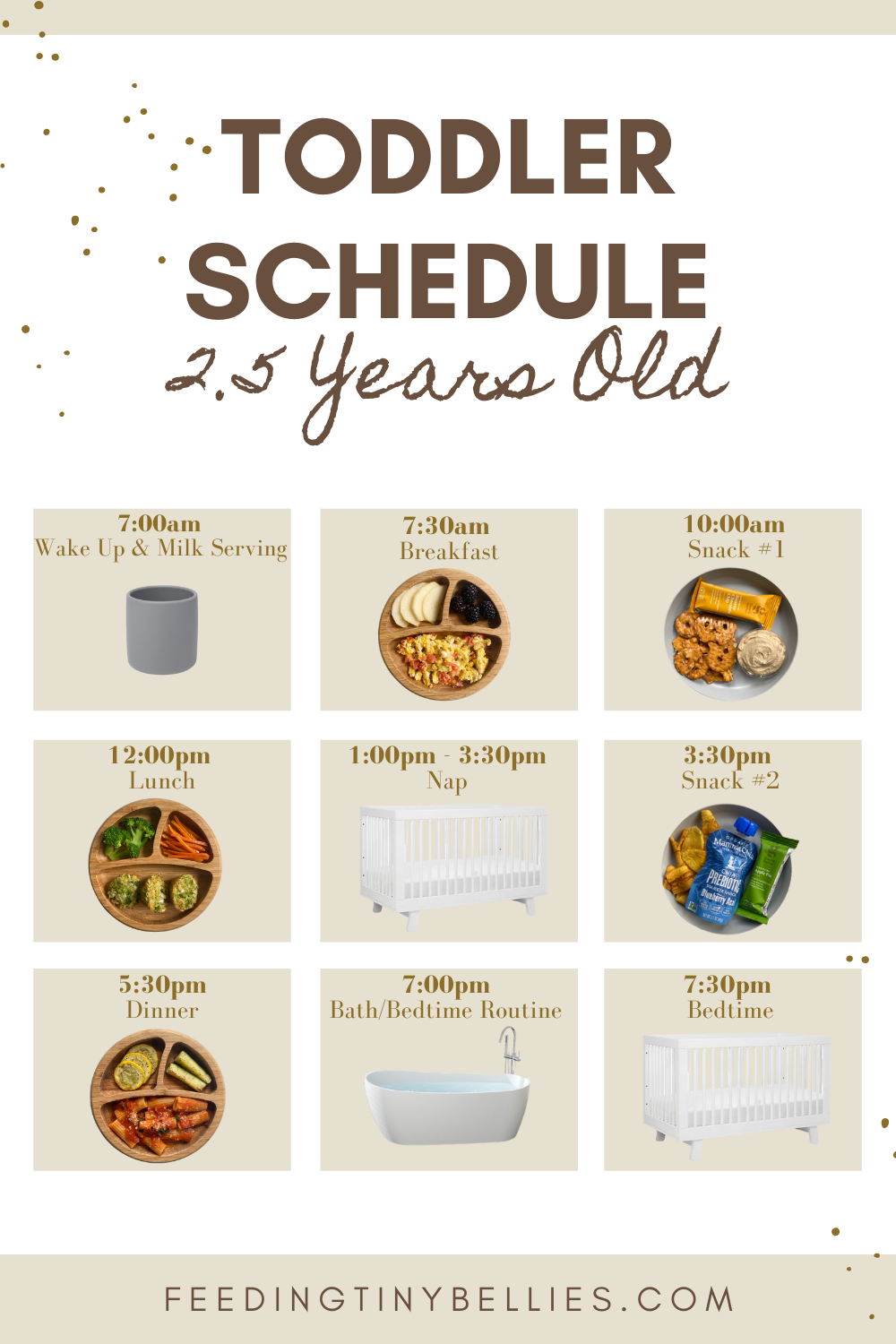
Here’s what a typical toddler schedule looked like for us.
- 7:00am: Wake + Milk
- 7:30am: Breakfast
- 10:00am: Snack
- 12:00pm: Lunch
- 1:00pm: Nap (2–3 hours)
- After nap: Snack
- 5:30pm: Dinner
- 7:30–8:00pm: Bedtime
At this stage, the goal was 3 meals + 2 snacks per day.
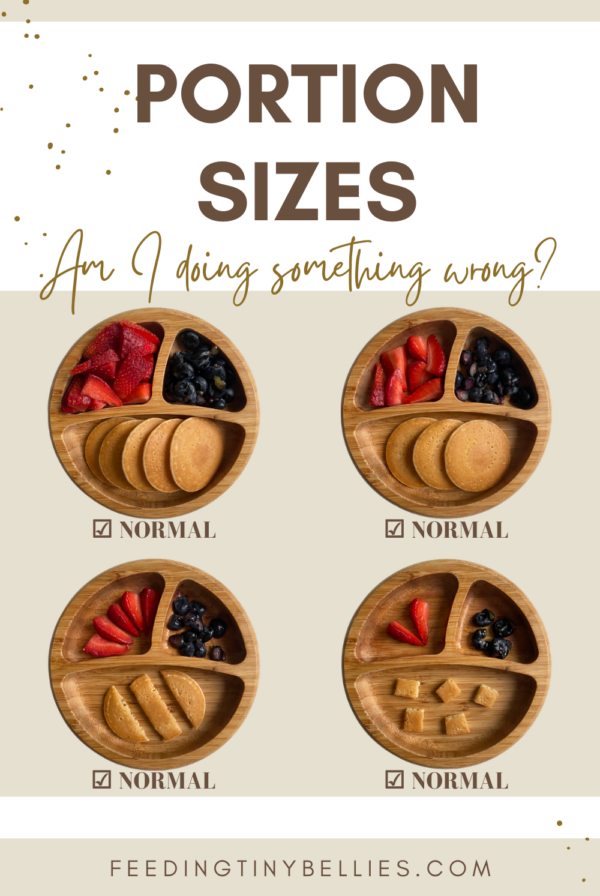
Baby And Toddler Portion Sizes
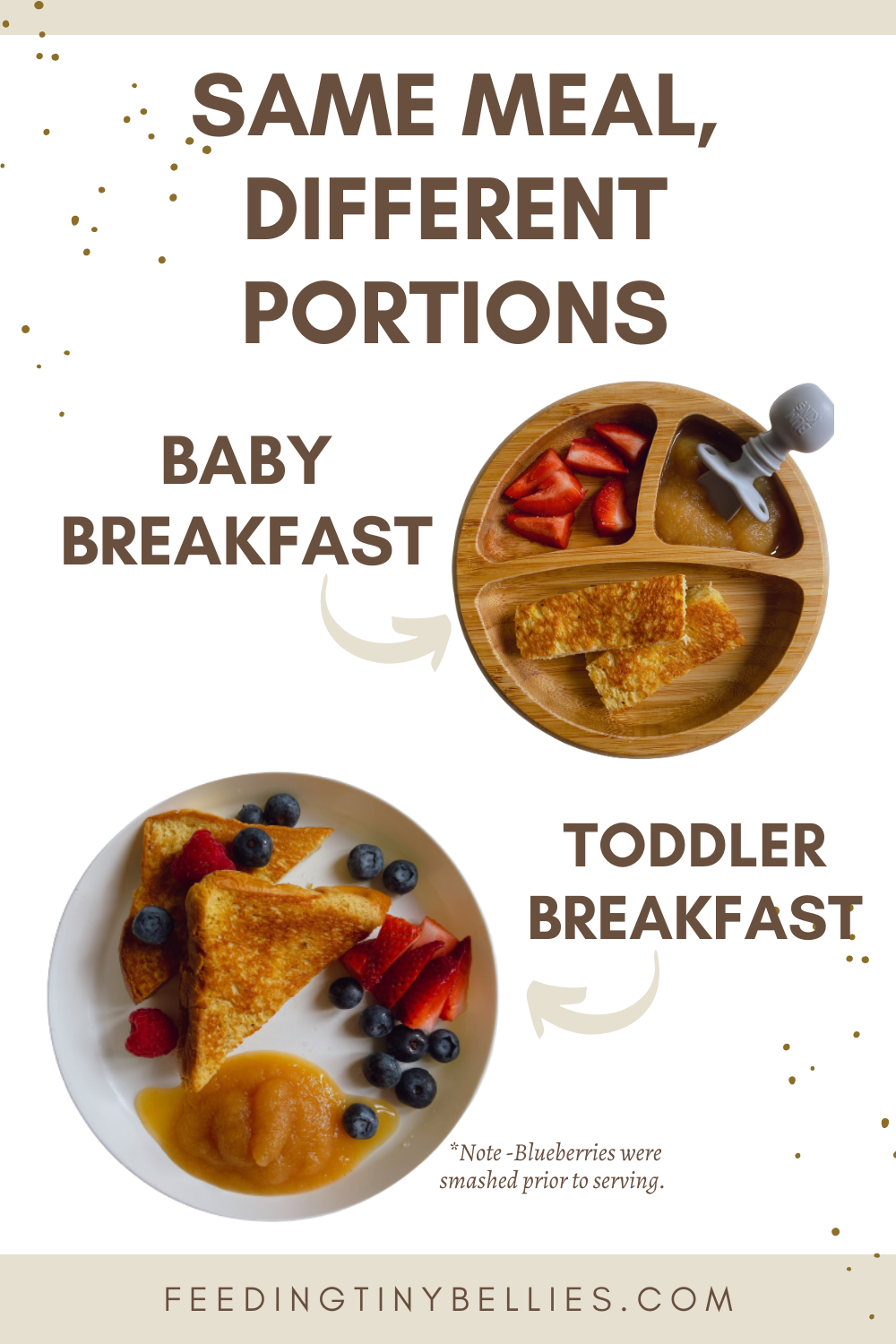
Both kids ate the same meals; I just adjusted portions based on age and appetite. Portion sizes can vary a lot, and that’s completely normal. Follow your child’s cues and trust that they know how much they need.
Do You Need a Feeding Schedule?
Your schedule may look nothing like this, and that’s okay. You may not have a schedule at all, and that’s okay, too! Some families thrive with structure, while others prefer flexibility. The goal over time is simply: 3 meals and 2 snacks per day. How you get there can look different for everyone.
Frequently Asked Questions
No, you don’t need a strict schedule. Most babies and toddlers do best with a flexible routine rather than exact timing. Think of schedules as a guide, not something you have to follow perfectly every day.
Under 12 months, milk (breastmilk or formula) should still be the primary source of nutrition. Many families offer milk first or space solids about 30–60 minutes after a milk feed.
Look at the bigger picture: wet diapers, growth, energy levels, and overall mood matter more than exact meal amounts or timing.
More BLW Resources

There’s no perfect feeding schedule. Some days will go smoothly. Others won’t. Stay flexible, follow your child’s cues, and find a rhythm that works for your family. As a mom who’s been through multiple feeding stages, I’ve learned that flexibility matters more than perfection.










How many ounces are you feeding the 10 mo old?