How Much Should My Baby Eat? Baby Portion Sizes Explained

on Oct 16, 2021, Updated Apr 21, 2026
This post may contain affiliate links. Please read our disclosure policy.
Add as Google preferred sourceIf you’ve ever wondered whether your baby is eating too much or too little, you are definitely not alone. Portion sizes can feel confusing, especially when every baby seems to eat differently. Let’s talk about what’s actually normal when it comes to how much babies should eat, and why comparison doesn’t tell the full story.
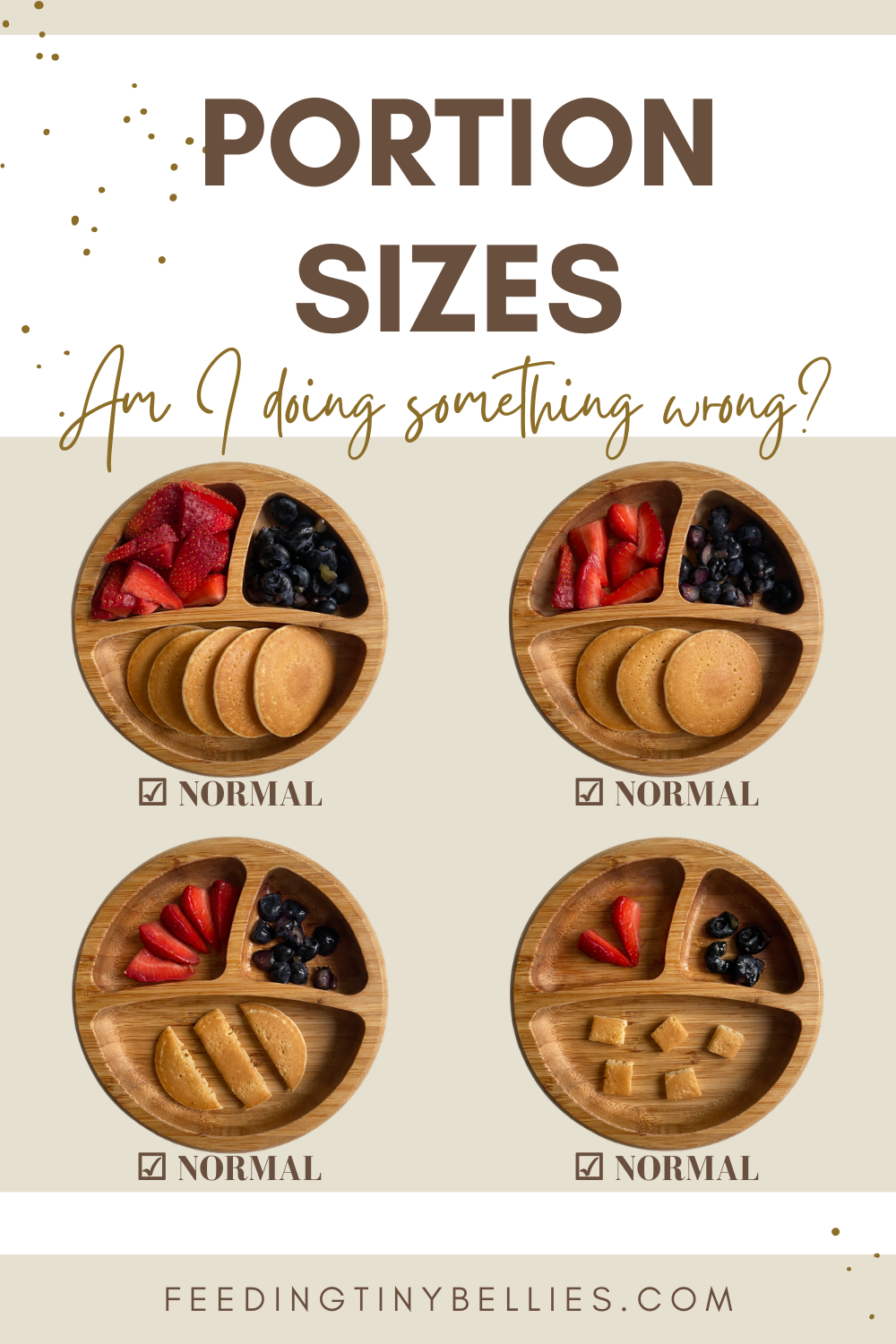
“Wow, this baby eats so much…am I doing something wrong?” “Wow, my baby barely eats anything…am I doing something wrong?”
If you’ve ever had thoughts like this, you are not alone. So many parents quietly wonder if their baby is eating “enough,” especially when comparing to other babies. Let’s talk about it.
Table of Contents
- Why We Compare Baby Eating Habits
- Every Baby Eats Differently (and That’s Normal)
- So, How Much Should a Baby Eat?
- What Baby Portion Sizes Actually Look Like
- Start Small, Then Follow Baby’s Lead
- Signs Your Baby Is Getting Enough
- What Matters More Than Portion Sizes
- A Personal Note
- Frequently Asked Questions
- More blw reSOURCES
Why We Compare Baby Eating Habits
It’s completely normal to compare. We compare:
- How much babies eat
- How often they eat
- Sleep patterns
- Growth and milestones
But when it comes to feeding, comparison can quickly lead to unnecessary stress. The truth is: there is no universal “right amount” a baby should eat.
Every Baby Eats Differently (and That’s Normal)
Babies are not meant to eat identical portions. A baby’s appetite can change daily depending on:
- Growth spurts
- Teething
- Tiredness
- Illness
- Milk intake earlier in the day
- Mood and development
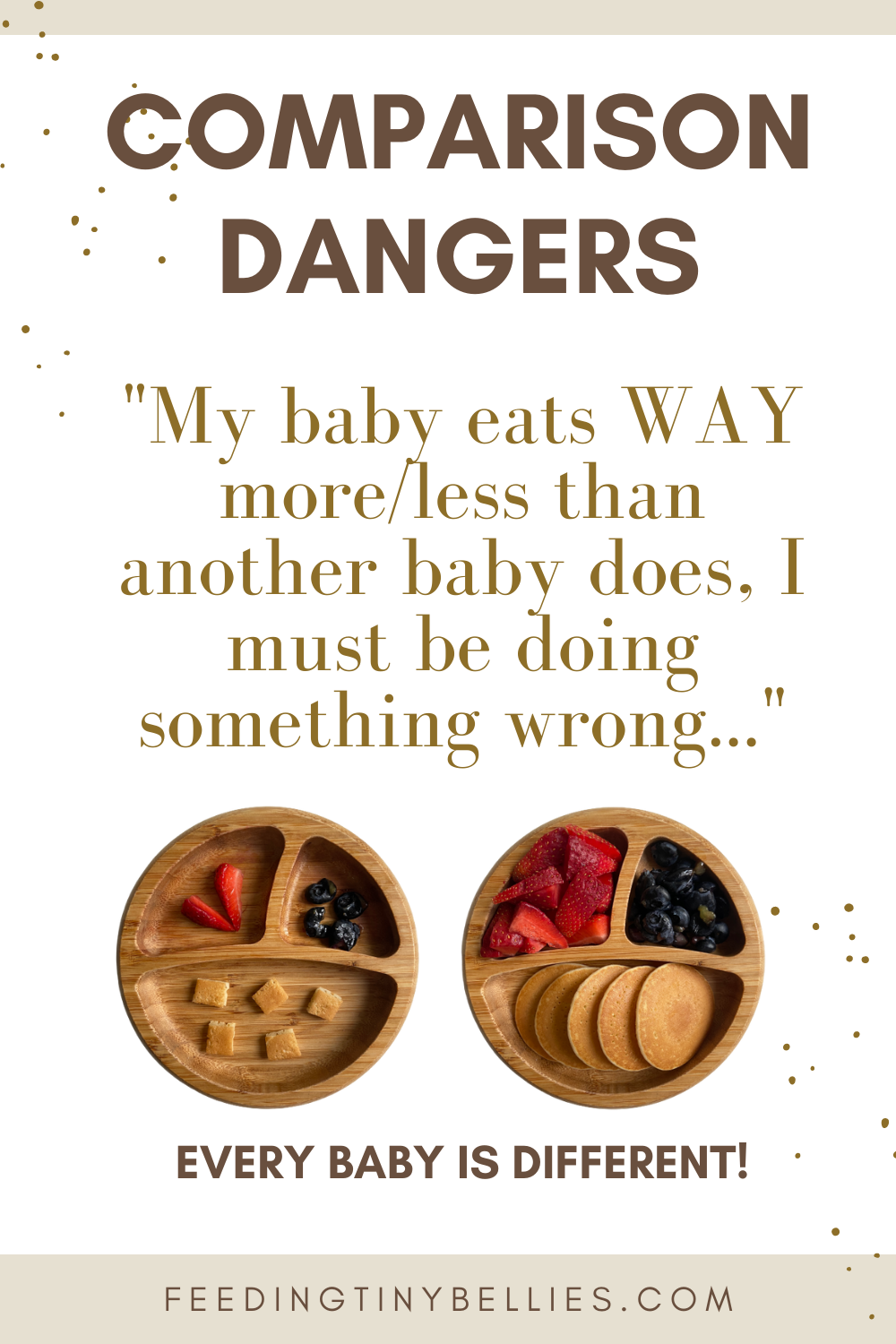
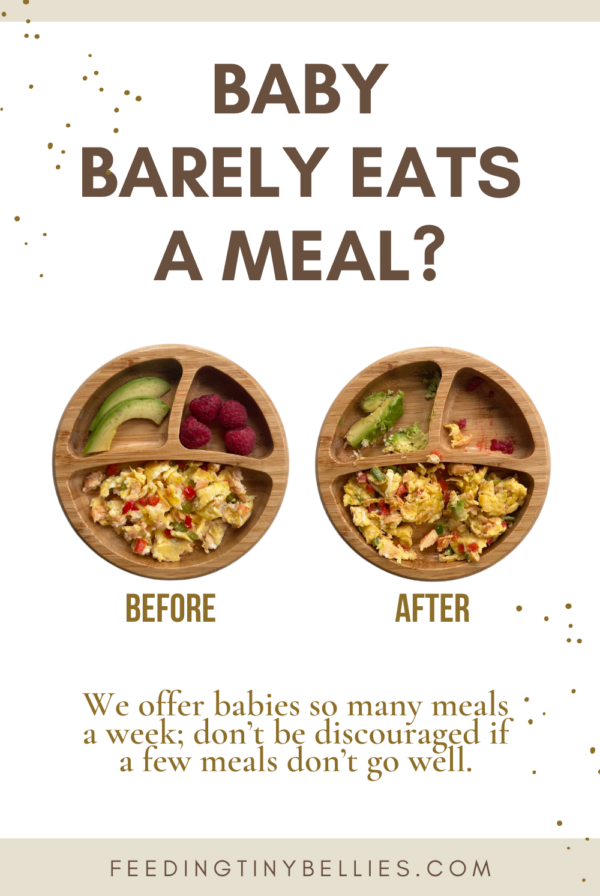
Some days they eat a lot. Some days, they barely eat anything. Both are normal.
So, How Much Should a Baby Eat?
There is no exact number that applies to every baby. Instead, think of baby eating in this way:
✔ You offer the food
✔ Baby decides how much to eat
This is often called the division of responsibility. Your job is to provide nutritious meals and safe foods. Your baby’s job is to decide how much they need.
What Baby Portion Sizes Actually Look Like
Here’s what’s important to understand:
- Portion sizes are starting points, not rules
- Babies often eat less than we think
- Food ending up on the floor is still part of eating
- Intake varies meal to meal, not just day to day
A “full” baby might eat:
- A few bites one meal
- A lot the next meal
- Almost nothing at another
And that’s still okay.
Start Small, Then Follow Baby’s Lead
A helpful approach:
- Start with small portions
- Offer more if baby wants it
- Watch for hunger and fullness cues
- Let baby guide the pace
This helps reduce waste and pressure at the table.
Signs Your Baby Is Getting Enough
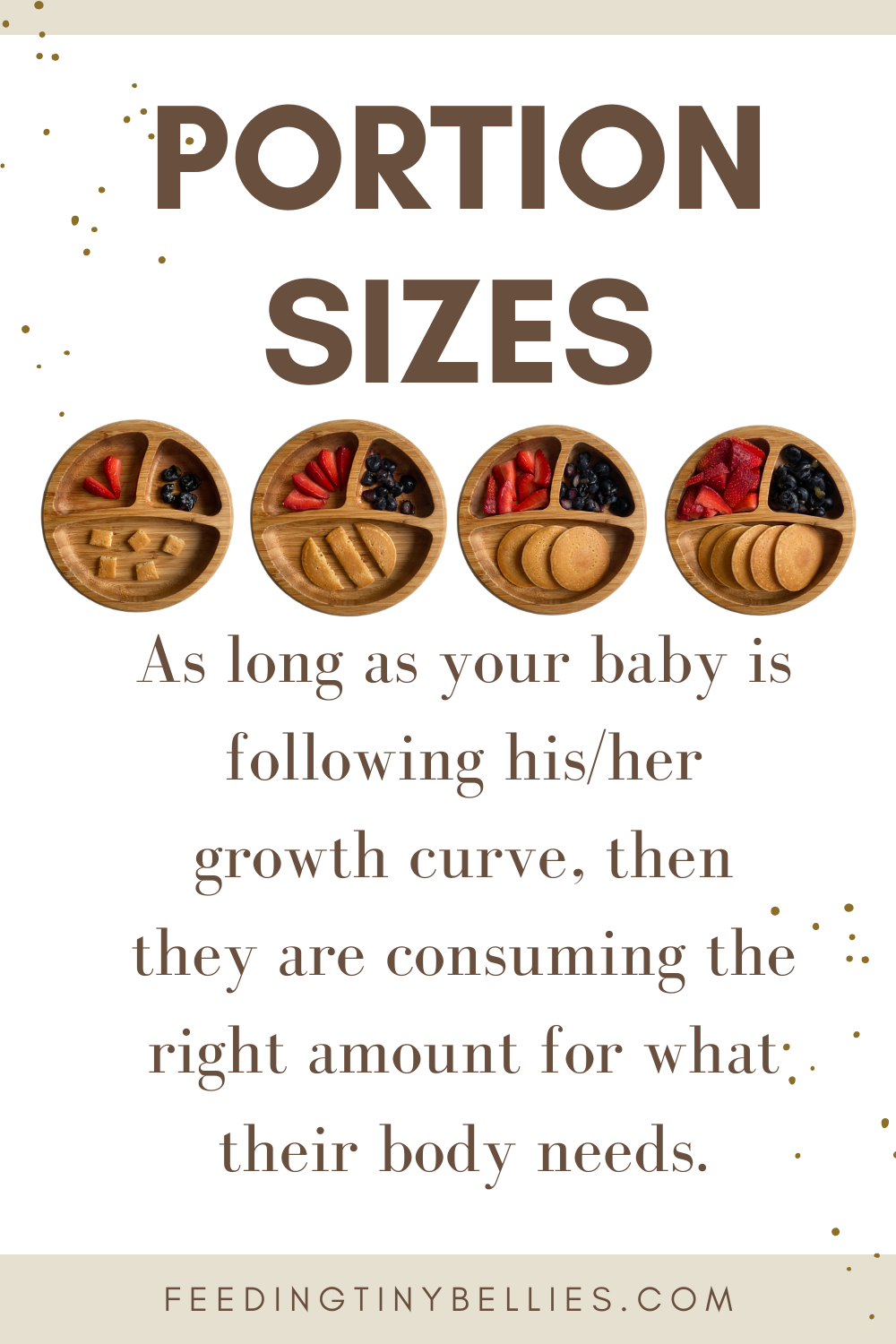
Instead of focusing on exact portions, look at overall patterns. Your baby is likely getting enough if they:
- Are growing along their curve
- Have regular wet diapers
- Seem satisfied after meals (even if small)
- Are alert and active
- Are continuing to gain skills and energy
If you ever have concerns about growth, your pediatrician is the best person to guide you.
What Matters More Than Portion Sizes
Instead of asking, “Did my baby eat enough at this meal?” Try asking:
- Was food offered regularly?
- Was variety included over time?
- Is baby learning to eat and explore food?
- Are meals low-pressure and positive?
Feeding is about the long-term pattern, not individual meals.
A Personal Note
With my first child, I found myself constantly comparing. I worried:
- If he ate less than other babies
- If his portions were too small
- If he was “behind”
But the more I stepped back, the more I realized something important. My baby was exactly what he needed to be for him. Once I stopped comparing, feeding became so much more peaceful.
Frequently Asked Questions
That can be normal, especially if they are getting enough milk and growing well. Appetite changes often.
Also normal. Some babies have larger appetites or growth spurts.
Look at growth patterns, diaper output, energy levels, and overall development, not individual meals.
More blw reSOURCES
There is no perfect portion size that every baby should eat. Your baby is not meant to match another baby’s appetite, schedule, or growth pattern. Some babies eat more. Some eat less. All babies are different. And that difference is normal.