

Toddler Feeding Schedule by Age: 1-Year-Old & 3-Year-Old Routine

on Nov 20, 2021, Updated Apr 23, 2026
This post may contain affiliate links. Please read our disclosure policy.
Add as Google preferred sourceCreating a daily schedule for your toddler can feel overwhelming, especially when every child is so different. While there’s no such thing as a “perfect” schedule, having a general routine for meals, snacks, and sleep can make the day feel much smoother. Let’s walk through what a realistic day can look like for toddlers.
Table of Contents
- A Quick Reality Check About Toddler Schedules
- What a Toddler Feeding Schedule Usually Includes
- 1-Year-Old Sample Feeding Schedule
- 3-Year-Old Sample Feeding Schedule (At the Time)
- How to Build a Feeding Schedule That Actually Works
- Why I Don’t Follow This Exact Schedule Anymore
- Frequently Asked Questions
- More Toddler Feeding Resources
A Quick Reality Check About Toddler Schedules
Before diving into examples, it’s important to set expectations:
Toddler schedules are never perfectly consistent.
Some days will feel smooth and predictable, and other days everything will shift because of:
- Short naps
- Growth spurts
- Illness
- Travel or outings
- Teething
- Changes in appetite
A schedule is meant to be a guide, not something you follow perfectly every day.
What a Toddler Feeding Schedule Usually Includes
Most toddlers do well with:
- 3 meals per day
- 2 snacks per day
- Milk (varies by age)
- 1–2 naps (depending on age)
The goal isn’t strict timing, it’s a steady rhythm of eating opportunities throughout the day.
1-Year-Old Sample Feeding Schedule
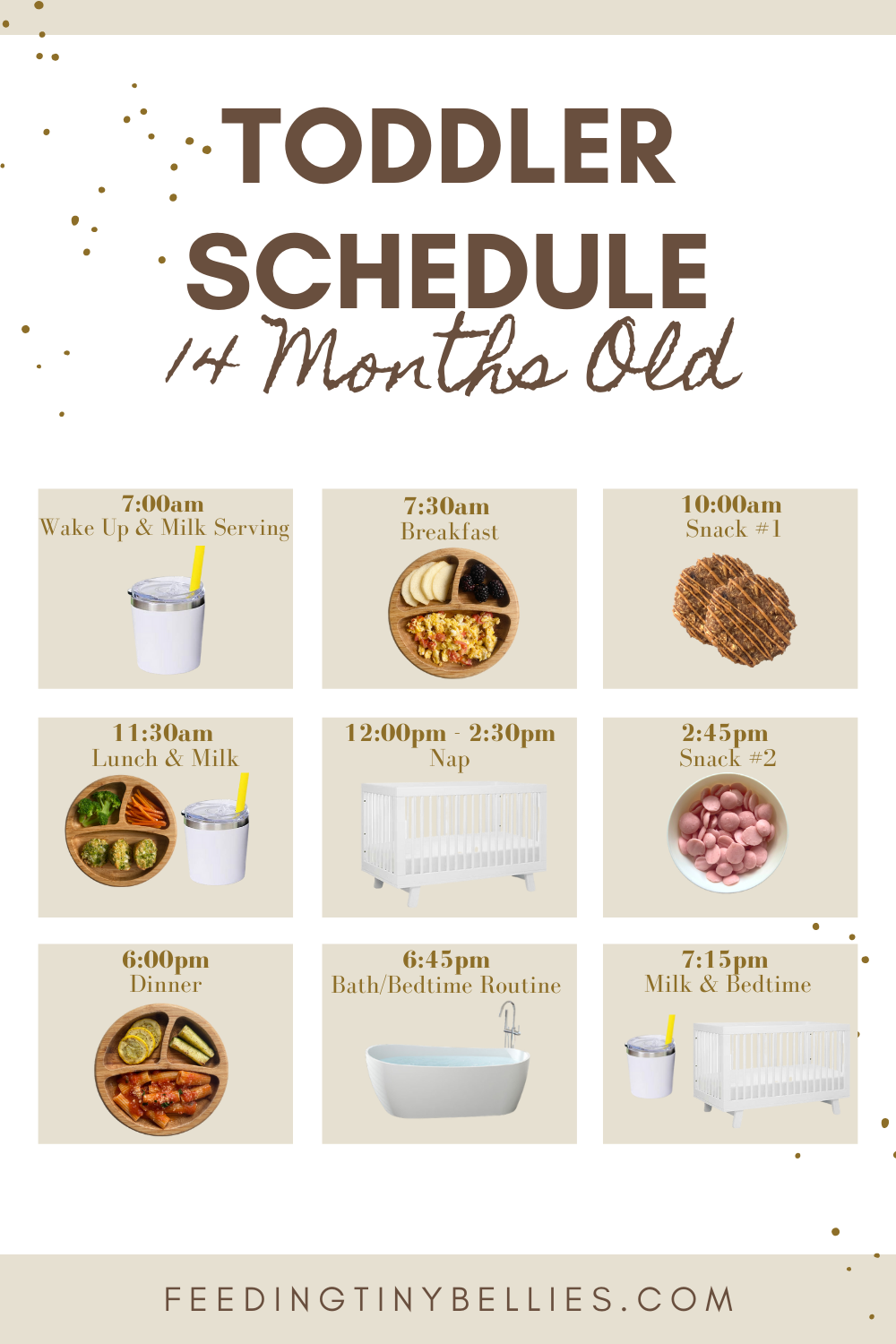
This is what a typical day looked like when my second son was around age 1:
7:00 AM – Wake + milk
7:30 AM – Breakfast
10:00 AM – Morning snack
11:30 AM – Lunch + milk
12:00 PM – Nap
2:45 PM – Snack
6:00 PM – Dinner (family meal)
6:45 PM – Bedtime routine
7:15 PM – Milk + bedtime
What this stage looked like in real life:
At around 1, meals were very hit-or-miss. Some days my son ate full meals, other days he barely touched anything. That’s completely normal because:
- Growth slows compared to infancy
- Appetite naturally fluctuates
- Milk is still a major source of nutrition
- Distractions and development are constant
The biggest goal at this age is exposure, routine, and opportunity, not quantity eaten.
3-Year-Old Sample Feeding Schedule (At the Time)
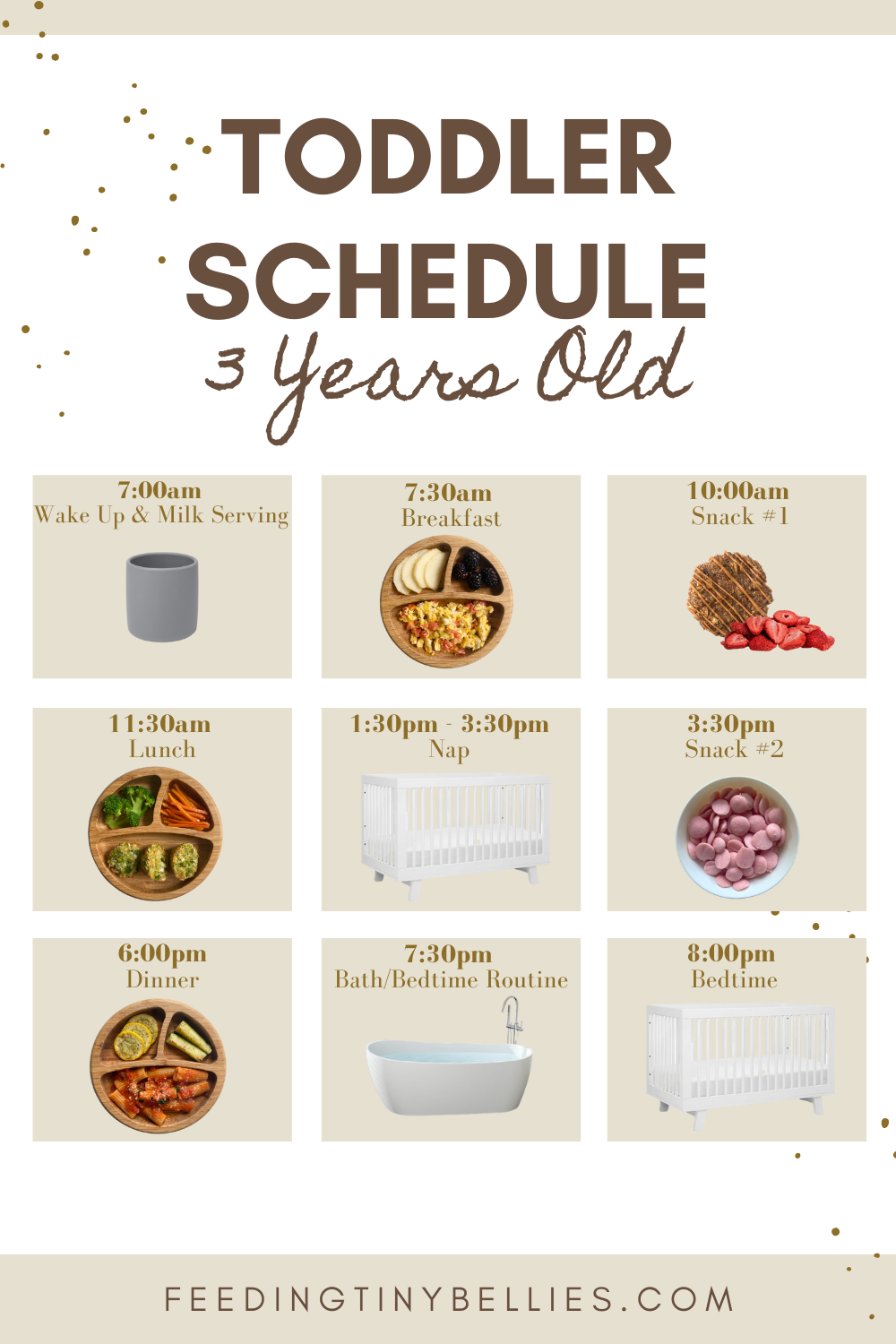
Here’s what our routine looked like when my oldest was around 3:
7:00 AM – Wake + optional cup of milk
7:30 AM – Breakfast
10:00 AM – Snack
11:30 AM – Lunch
1:30 PM – Nap (or quiet time)
3:30 PM – Snack
6:00 PM – Dinner
7:30 PM – Bedtime routine
8:00 PM – Bed
What changed at this stage:
By age 3, things started to feel a bit more structured, but still flexible.
Some key differences:
- Nap transitions started happening (some kids drop naps entirely around this age)
- Appetite becomes more opinionated (“I only want snacks today”)
- Mealtimes can feel more predictable, but still not perfect
- Social eating becomes more important (eating together helps a lot)
Even at this stage, some days he would eat great and other days he barely touched his food.
How to Build a Feeding Schedule That Actually Works
If you’re trying to create a routine for your toddler, here’s what actually matters more than exact times:
1. Start with wake time and bedtime
These naturally anchor the rest of the day.
2. Space meals and snacks evenly
Most toddlers do well with eating every 2.5–3 hours.
3. Watch wake windows (especially for younger toddlers)
Overtired toddlers often:
- refuse meals
- snack constantly
- have more emotional mealtimes
4. Keep milk separate from meals (when possible)
This helps prevent toddlers from filling up too quickly before solids.
5. Offer structure, but allow flexibility
A “routine” should still work on messy, real-life days.
Why I Don’t Follow This Exact Schedule Anymore
Just to be clear, this is what our schedule looked like at the time, not what it looks like today. As kids grow:
- Nap schedules change
- Appetite shifts
- Activities increase
- Routines evolve naturally
And that’s exactly how it should be.
Frequently Asked Questions
That’s very normal. Appetite varies day to day. Keep offering and don’t stress over one meal or one day.
Try spacing snacks out and limiting grazing so meals feel more structured.
No, think in terms of order of the day, not strict clock times.
More Toddler Feeding Resources
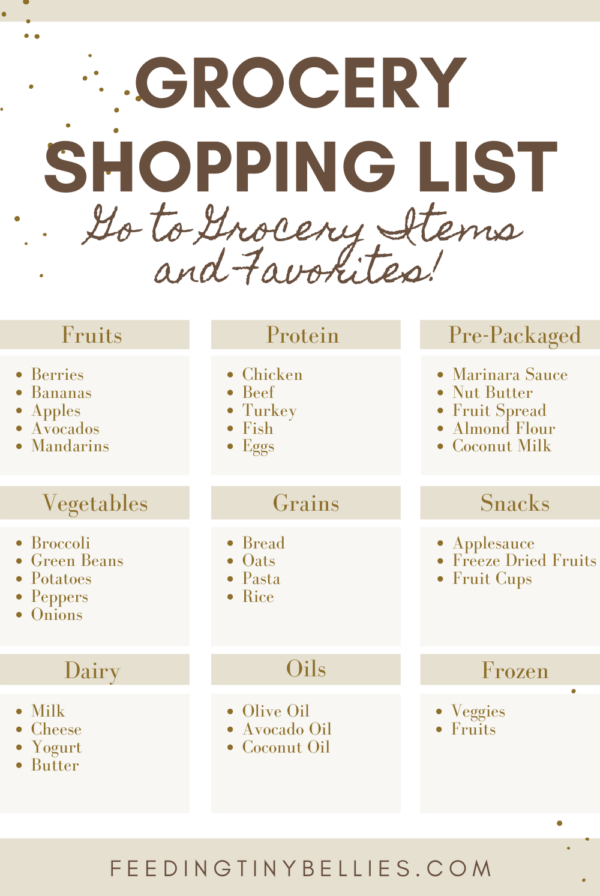



Toddler schedules are not about perfection, they’re about rhythm, structure, and flexibility. What worked for us at ages 1 and 3 won’t look the same forever, and that’s completely normal. Do you have a schedule in place for your little one? Or are you more of a wing-it, go with the flow kind of person? Let me know down in the comments below!










I love the detail of these schedules! FTM here and wondering how large each milk feed was? Can you share the ounces? I want to gauge what my daughter will need as she is transitioning to a one nap schedule!
Hi Angela! I’m so happy that you find these schedules helpful! As far as milk feeds, it’s a little hard for me to gauge how large each milk feed was because I breastfed my son during most feeds, but when he did have a bottle it would usually have anywhere from 4-6 oz in it! Our pediatrician recommended that we not go over 24 oz of milk per day once he turned 1, so you can divide that by the number of milk feeds you offer per day to get an idea of how much to offer per bottle. I hope that helps!